27.11.09

Daring Bakers - Go Italian!

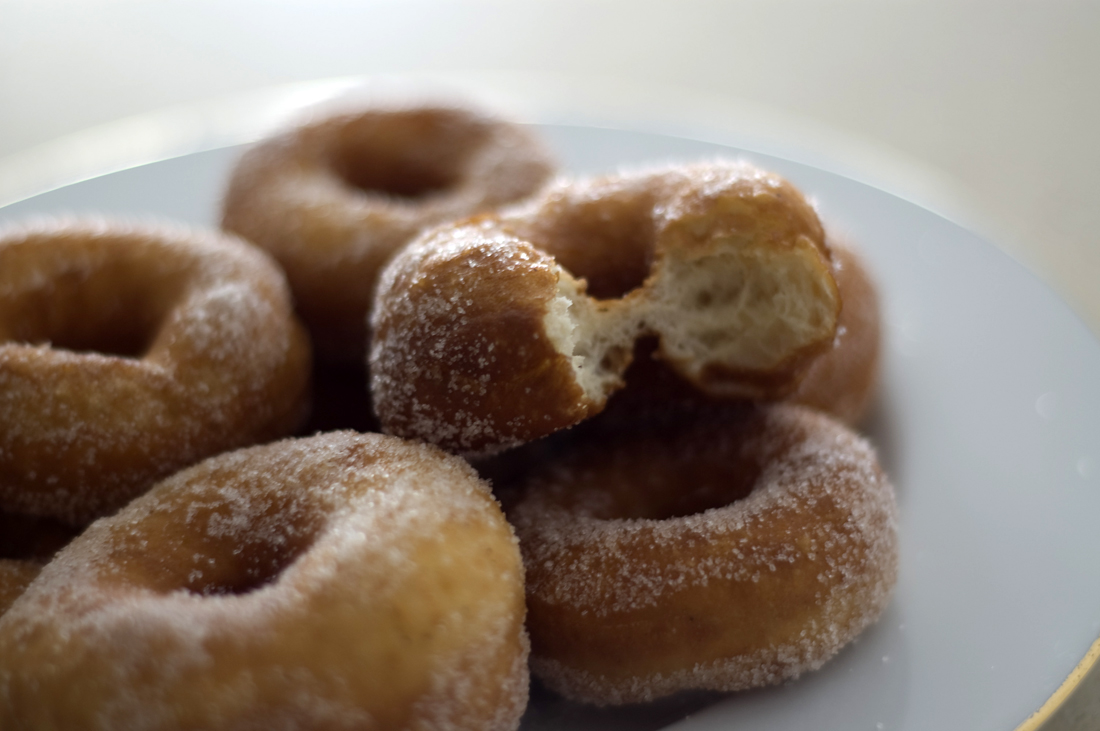
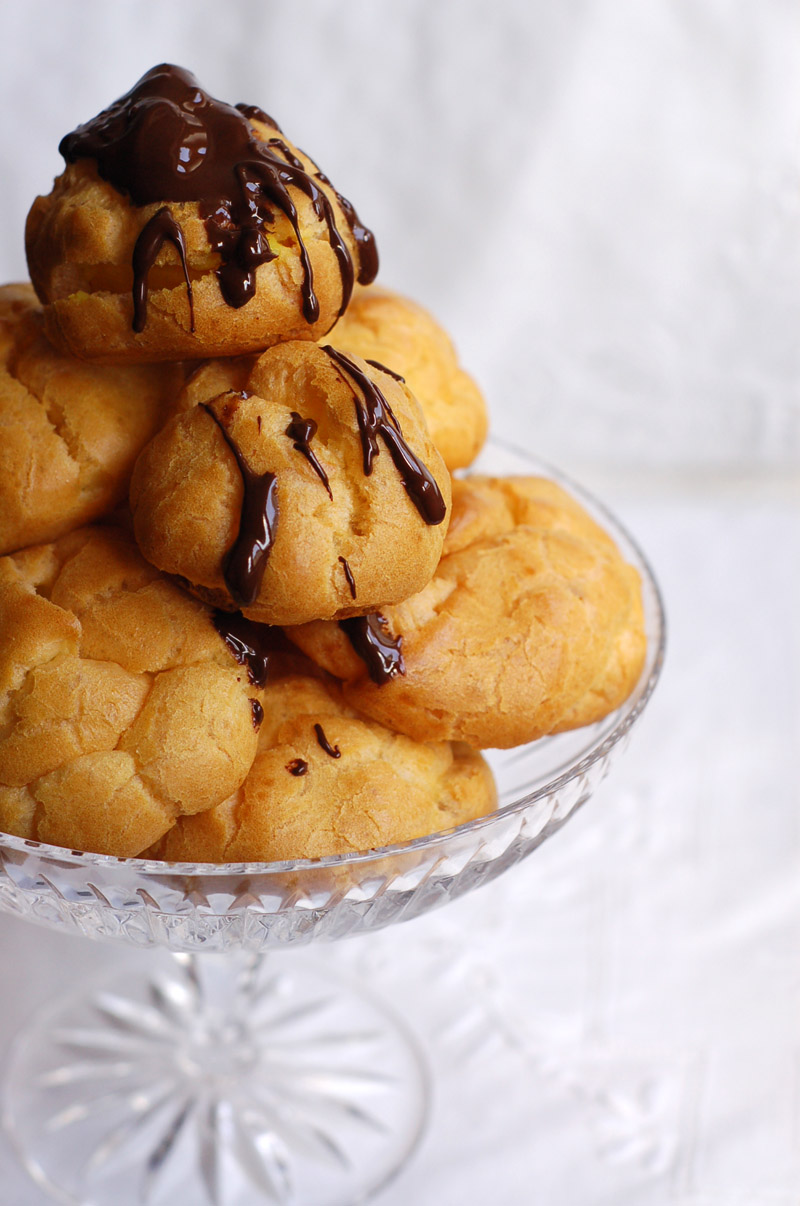
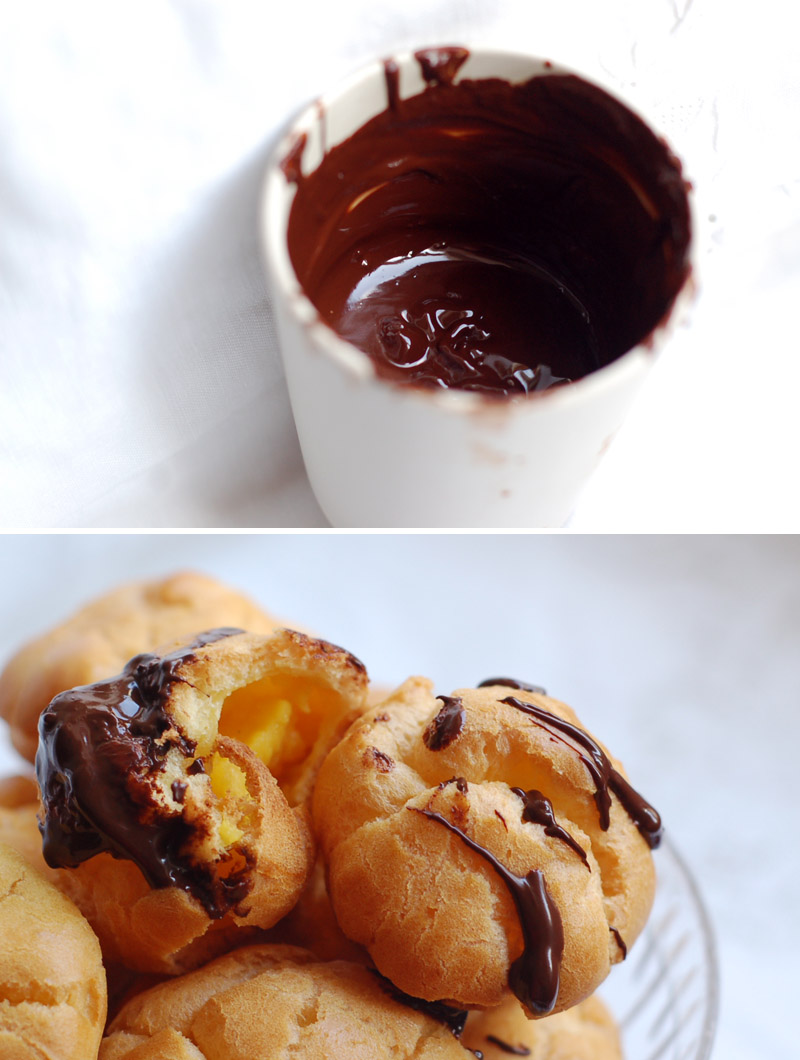
Cannoli(poleons)

I'm probably not the only one singing Alabama 3 today. I'm a lousy singer. For once I'm happy there's no way you can listen to me singing I woke up this morning / Got myself a gun, Mama always said I'd be / The Chosen One. Over and over. It's The Sopranos theme song, of course. My favourite version is actually sang by Leonard Cohen. The perfect soundtrack for this month DB challenge!

The November 2009 Daring Bakers Challenge was chosen and hosted by Lisa Michele of Parsley, Sage, Desserts and Line Drives. She chose the Italian Pastry, Cannolo (Cannoli is plural), using the cookbooks Lidia’s Italian-American Kitchen by Lidia Matticchio Bastianich and The Sopranos Family Cookbook by Allen Rucker; recipes by Michelle Scicolone, as ingredient/direction guides. She added her own modifications/changes, so the recipe is not 100% verbatim from either book.

Cannoli(poleons)

Lidisano’s Cannoli
Makes 22-24 cannoli

CANNOLI SHELLS
2 cups (250 grams/8.82 ounces) all-purpose flour
2 tablespoons(28 grams/1 ounce) sugar
1 teaspoon (5 grams/0.06 ounces) unsweetened baking cocoa powder
1/2 teaspoon (1.15 grams/0.04 ounces) ground cinnamon
1/2 teaspoon (approx. 3 grams/0.11 ounces) salt
3 tablespoons (42 grams/1.5 ounces) vegetable or olive oil
1 teaspoon (5 grams/0.18 ounces) white wine vinegar
Approximately 1/2 cup (approx. 59 grams/approx. 4 fluid ounces/approx. 125 ml) sweet Marsala or any white or red wine you have on hand
1 large egg, separated (you will need the egg white but not the yolk)
Vegetable or any neutral oil for frying – about 2 quarts (8 cups/approx. 2 litres)
1/2 cup (approx. 62 grams/2 ounces) toasted, chopped pistachio nuts, mini chocolate chips/grated chocolate and/or candied or plain zests, fruits etc.. for garnish
Confectioners’ sugar

Note – If you want a chocolate cannoli dough, substitute a few tablespoons of the flour (about 25%) with a few tablespoons of dark, unsweetened cocoa powder (Dutch process) and a little more wine until you have a workable dough (Thanks to Audax).

CANNOLI FILLING
2 lbs (approx. 3.5 cups/approx. 1 kg/32 ounces) ricotta cheese, drained
1 2/3 cups cup (160 grams/6 ounces) confectioner’s sugar, (more or less, depending on how sweet you want it), sifted
1/2 teaspoon (1.15 grams/0.04 ounces) ground cinnamon
1 teaspoon (4 grams/0.15 ounces) pure vanilla extract or the beans from one vanilla bean
3 tablespoons (approx. 28 grams/approx. 1 ounce) finely chopped good quality chocolate of your choice
2 tablespoons (12 grams/0.42 ounces) of finely chopped, candied orange peel, or the grated zest of one small to medium orange
3 tablespoons (23 grams/0.81 ounce) toasted, finely chopped pistachios

Note – If you want chocolate ricotta filling, add a few tablespoons of dark, unsweetened cocoa powder to the above recipe, and thin it out with a few drops of warm water if too thick to pipe.

DIRECTIONS FOR SHELLS:
1. In the bowl of an electric stand mixer or food processor, combine the flour, sugar, cocoa, cinnamon, and salt. Stir in the oil, vinegar, and enough of the wine to make a soft dough. Turn the dough out onto a lightly floured surface and knead until smooth and well blended, about 2 minutes. Shape the dough into a ball. Cover with plastic wrap and let rest in the fridge from 2 hours to overnight.

2 Cut the dough into two pieces. Keep the remaining dough covered while you work. Lightly flour a large cutting or pastry board and roll the dough until super thin, about 1/16 to 1/8” thick (An area of about 13 inches by 18 inches should give you that). Cut out 3 to 5-inch circles (3-inch – small/medium; 4-inch – medium/large; 5-inch;- large. Your choice). Roll the cut out circle into an oval, rolling it larger and thinner if it’s shrunk a little.

3 Oil the outside of the cannoli tubes (You only have to do this once, as the oil from the deep fry will keep them well, uhh, oiled..lol). Roll a dough oval from the long side (If square, position like a diamond, and place tube/form on the corner closest to you, then roll) around each tube/form and dab a little egg white on the dough where the edges overlap. (Avoid getting egg white on the tube, or the pastry will stick to it.) Press well to seal. Set aside to let the egg white seal dry a little.

4. In a deep heavy saucepan, pour enough oil to reach a depth of 3 inches, or if using an electric deep-fryer, follow the manufacturer’s directions. Heat the oil to 375°F (190 °C) on a deep fry thermometer, or until a small piece of the dough or bread cube placed in the oil sizzles and browns in 1 minute. Have ready a tray or sheet pan lined with paper towels or paper bags.

5. Carefully lower a few of the cannoli tubes into the hot oil. Do not crowd the pan. Fry the shells until golden, about 2 minutes, turning them so that they brown evenly.

8. Lift a cannoli tube with a wire skimmer or large slotted spoon, out of the oil. Using tongs, grasp the cannoli tube at one end. Very carefully remove the cannoli tube with the open sides straight up and down so that the oil flows back into the pan. Place the tube on paper towels or bags to drain. Repeat with the remaining tubes. While they are still hot, grasp the tubes with a potholder and pull the cannoli shells off the tubes with a pair of tongs, or with your hand protected by an oven mitt or towel. Let the shells cool completely on the paper towels. Place shells on cooling rack until ready to fill.

9. Repeat making and frying the shells with the remaining dough. If you are reusing the cannoli tubes, let them cool before wrapping them in the dough.

Pasta Machine method:
1. Divide the dough into 4 equal pieces. Starting at the middle setting, run one of the pieces of dough through the rollers of a pasta machine. Lightly dust the dough with flour as needed to keep it from sticking. Pass the dough through the machine repeatedly, until you reach the highest or second highest setting. The dough should be about 4 inches wide and thin enough to see your hand through

2. Continue rolling out the remaining dough. If you do not have enough cannoli tubes for all of the dough, lay the pieces of dough on sheets of plastic wrap and keep them covered until you are ready to use them.

3, Roll, cut out and fry the cannoli shells as according to the directions above.

For stacked cannoli:
1. Heat 2-inches of oil in a saucepan or deep sauté pan, to 350-375°F (176 – 190 °C).

2. Cut out desired shapes with cutters or a sharp knife. Deep fry until golden brown and blistered on each side, about 1 – 2 minutes. Remove from oil with wire skimmer or large slotted spoon, then place on paper towels or bags until dry and grease free. If they balloon up in the hot oil, dock them lightly prior to frying. Place on cooling rack until ready to stack with filling.

DIRECTIONS FOR FILLING:
1. Line a strainer with cheesecloth. Place the ricotta in the strainer over a bowl, and cover with plastic wrap and a towel. Weight it down with a heavy can, and let the ricotta drain in the refrigerator for several hours to overnight.

2. In a bowl with electric mixer, beat ricotta until smooth and creamy. Beat in confectioner’s sugar, cinnamon, vanilla and blend until smooth. Transfer to another bowl and stir in chocolate, zest and nuts. Chill until firm.(The filling can be made up to 24 hours prior to filling the shells. Just cover and keep refrigerated).

ASSEMBLE THE CANNOLI:
1. When ready to serve, fill a pastry bag fitted with a 1/2-inch plain or star tip, or a ziplock bag, with the ricotta cream. If using a ziplock bag, cut about 1/2 inch off one corner. Insert the tip in the cannoli shell and squeeze gently until the shell is half filled. Turn the shell and fill the other side. You can also use a teaspoon to do this, although it’s messier and will take longer.

2. Press or dip cannoli in chopped pistachios, grated chocolate/mini chocolate chips, candied fruit or zest into the cream at each end. Dust with confectioner’s sugar and/or drizzles of melted chocolate if desired.

My thoughts on the challenge:
- My cannoli are actually stacked cannoli (aka Cannolipoleons) because I couldn't find the forms and didn't manage an alternative.
- Deep frying is definitely not my thing, so I've halved the recipe. Again! No problems to report here.
- I went for chocolate cannoli which was the probable cause of having to add a little extra liquid (white wine + 1 tsp walnut oil). I was very pleased with the result. Thanks for the challenge Lisa Michelle!

Beautiful cannoli can be found all over The Daring Kitchen!

12.11.09

Mini quiches for a friend's blogiversary

Flores caranguejo e lima

In their typical way of getting to the subject, Danish say the road to a friend's house is never long. Specially when the invitation to cook comes in such a nice way and the occasion calls for celebration. I don't fancy flowers or candies when I'm invited to a friend's place but today is an exception and I bring flowers to Moira. They're edible and I couldn't stop myself: in the way here I've had a couple... Luckily my home is just around the corner or there would be no flowers left for the party. Happy blogiversary to Tertúlia de Sabores!

Flores caranguejo e lima

Mini Crab-Lime quiches
Lightly adapted from O livro essencial dos aperitivos, KÖNEMANN.

12 mini quiches (or a large one)

2 small eggs (or a large one)
150 ml coconut milk
1 tsp lime jiuce
casca de 1 lima, finamente ralada (pode usar-se limão)
120 grs canned crabmeat, drained
1 tbsp parsley, finely chopped
12 square sheets shortcrust pastry*
a dash of colorau or sweet paprika (optional), to sprinkle

Preheat oven to 200°C. Butter muffin pan and line with the pastry squares. Beat eggs lightly. Combine the remaining ingredients and mix. Season with salt and pepper freshly ground. Fill each shell with the batter to 2/3 of its capacity. Sprinkle with colorau. Bake for 20-25 minutes until golden. Serve warm.

* Shortcrust pastry is a breeze to make with a food processor. Combine 150 grs plain flour, 75 grs chopped cold butter, 1 tsp sugar, a dash of salt in the food processor bowl and pulse to mix all ingredients. Add 30 ml chilled water and pulse whilst doing that until a ball forms. Remove the pastry from the food processor bowl to a floured surface. Knead lightly to form a circle. Cover with film and chill for 30 minutes. Roll out and cut circles (about 8 cm wide each). Wrapped in cling film, uncooked shortcrust pastry dough will keep for up to two days in the refrigerator or can be freezed uncooked.

5.11.09

A cake for a special occasion

bolodeclarascomrecheio

I'm not good with special days like birthdays or any sort of anniversaries. They make me want to raise my arm and ask silly questions like 'why today' and not tomorrow or why not yesterday. I used to do the same when I was a kid going to schools with a strong religious inspiration, and asking the most profane questions. Lucky for me, my teachers were always kind with a 7 year old with a sharp tongue. I haven't changed over the years. I forget my friends' birthdays or I'm simply late, I mix up the days or the months... So why celebrate today and not tomorrow? It's not everyday you realize you've been blogging for 2 years. I don't quite remember the first year passing by, I admit. It was that good. I'm grateful for the wonderful people I met, I'm grateful for all that I've learnt and all the great experiences and happy days I had because of food blogging. So grab your fork, the cake is served! ;)

Birthday cake

Cotton Cake
Adapted from Tachos de Ensaio

250 grs plain flour
200 grs caster sugar
70 grs vanilla sugar
150 grs unsalted butter, room temperature
400 ml milk
½ tsp salt
1 Tbsp baking powder
5 egg whites (about 150 grs)

Preheat the oven to 180ºC. You'll need one large and two medium bowls. In a medium, sift flour and baking powder. Set aside. Using a second medium bowl beat the egg whites until they hold stiff peaks.
In a large bowl, cream butter and both sugars until fluffy. Add one third of the dries. When incorporated, add half of the milk, a little at a time. Add another third of the dries, then the other half of the milk and finish with the dries. Beat just until the batter is smooth. Gently fold the meringue without beating. Pour the batter into a greased, lined with parchment paper cake tin. Bake for 45-50 minutes or until sides pull away from the pan and skewer inserted in middle comes out clean. Cool cake completely before halving it.

Syrup:
1 cup sugar
250 ml water
¼ cup cherry liqueur (I used ginjinha)

Combine sugar and water in a saucepan, and bring to a boil. Reduce heat and simmer for 10 minutes. Remove from heat and add cherry liqueur. Cool completely before using.

Filling:
200 ml single cream
200 ml milk
150 grs sugar
2 yolks
2 large eggs
1 vanilla bean, halved and seeds scraped

Combine milk, cream and vanilla in a saucepan and bring to a boil. Remove from heat and set aside. In a medium bowl, beat eggs, yolks and sugar until fluffy. Remove the bean from the milk mixture and fold in the egg mixture. Cook until thickened, stirring with a whisk. Sieve if needed before using.

Berry compote:
1 cup mixture of berries such as blackberries, raspberries, red currants fresh (or frozen)
2 Tbsp caster sugar
1 Tbsp lemon juice

Combine all ingredients in a saucepan. Boil for 2 minutes. Reserve until completely cool.

Assemble the cake:
Half the cake with a sharp knife. Pour the syrup over the bottom part. Spread the filling with a spatula, allowing about 1 cm all around. Place the compote on top (do not use any utensil to do it, just pour as evenly as possible). Cover with the other half. Sprinkle with icing sugar and serve with fresh red currants.

This cake is better eaten the day or the day after it's done. Keep in the fridge.

27.10.09

Daring Bakers - All french kisses!

Hazelnut Macarons with Toffee

Lately I've been craving Paris. The symptoms are the usual: I miss walking the Seine and Boulevard Saint Michel, entering the bookshops and buying cookbooks eventually. I badly miss my favourite bistrots and the street vendors. I even miss the parisians! I daydream of crispy croissants, pain au raisins et café au lait, hot chocolate and... macarons. The perfect way to get me to Paris without leaving home is to bring Paris to me, all packed and arranged in a colourful and full flavoured macaron!

Macarons were on my list for quite a while. For some reason, I felt a bit scared every time I'd come across Helen's recipes - bookmarked since always from Tartelette - so I never got to try them. The 2009 October Daring Bakers’ challenge was brought to us by Ami S. She chose macarons from Claudia Fleming’s The Last Course: The Desserts of Gramercy Tavern as the challenge recipe. What a wonderful choice! Because I feared disaster (and after reading other fellow Daring Bakers experiences), I've decided to go with Helen's recipe with a few adjustments of my own as I wanted to use hazelnuts and toffee filling.

Hazelnut macarons & Paris

Hazelnut Macaron with Toffee filling

Lightly adapted from Claudia Fleming’s The Last Course: The Desserts of Gramercy Tavern and Helen's Pecan Pie Macarons

180 grs confectioners’ (icing) sugar
60 grs almond flour
55 grs hazelnut flour
35 grs granulated sugar
3 egg whites (about 90 grs), at room temperature

It's important to use aged egg whites. The day before making the macarons, separate the eggs. Leave the whites on the counter (if planning to use only in 48h or longer, keep in the fridge).

Combine the confectioners’ sugar, hazelnut and almond flour in the bowl of a food processor and grind until nuts are reduced to fine powder. Beat the egg whites until they hold soft peaks. Slowly add the granulated sugar and beat until the mixture holds stiff peaks. Add a third of the almond flour mixture into the meringue and fold gently to combine. Mix in the remaining almond flour. Don’t overfold, but fully incorporate your ingredients. [Helen's advice: Give quick strokes at first to break the mass and slow down.The whole process should not take more than 50 strokes. Test a small amount on a plate: if the tops flattens on its own you are good to go. If there is a small beak, give the batter a couple of turns.]
Spoon the mixture into a pastry bag fitted with a plain tip or use a Ziploc bag with a corner cut off. Pipe small rounds of batter (2.5 cm) onto baking sheets lined with nonstick liners (or parchment paper).

Preheat the oven to 150ºC (300ºF). Let the piped shells rest half an hour to an hour before baking. Bake the macaroon for 15-20 minutes (depending on size). Remove the pan from the oven and let cool slightly before gently remove the shelld. Cool completely on a rack before filling.

For the filling:

50g salted butter
125 grs light brown sugar
125 grs golden syrup
125 ml double cream
1/2 tsp vanilla extract

In a saucepan, mix all the ingredients. Boil until thickened (5 minutes), stirring occasionally. Let cool before filling the macarons.

Notes: I aged my egg whites for 3 days in the fridge. I should have sifted my hazelnut and almond flour. Unfortunately I haven't and that made the batter look a bit uneven but it didn't really matter in the final result. I let the piped shells rest half an hour to an hour before baking. I think that made all the difference as the second (and final) batch worked even better than the first. I used both a silicon mat and lined baking sheet with parchment paper with good results - nothing to report, the shells lifted easily with the aid of a spatula.

Visit the Daring Bakers blogroll to see all the macarons we baked!

16.10.09

When all else fails...

Hearty Seven-Grain Bread

When all else fails, I cook.

Some people go out after a god-awful day and slam a tennis ball around or jog their joints to pieces on a fitness course. I had a friend in Coral Gables who would escape to the beach with her folding chair and burn off her stress with sun and a slightly pornographic romance she wouldn't have been caught dead reading in her professional world—she was a district court judge. Many of the cops I know wash away their miseries with beer at the FOP lounge.

I've never been particularly athletic, and there wasn't a decent beach within reasonable driving distance. Getting drunk never solved anything. Cooking was an indulgence I didn't have time for most days, and though Italian cuisine isn't my only love, it has always been what I do best.


Even if I identify completely with the idea, these aren't my words. In fact they belong to a literature character, not a real person - although I suspect Patricia Cornwell lends a bit of her soul when she gives voice to Dr. Kay Scarpetta in her first novel, Postmortem. Scarpetta is a Chief Medical Examiner with a great love for food. And believe me, the lady can cook! I became hooked on Scarpetta's series not long ago because of these 6 words - When all else fails, I cook. Rephrasing slightly and it couldn't describe my feelings better - When everything fails, I bake some bread.

Hearty Seven-Grain Bread

Hearty Seven-Grain Bread
Lightly adapted from Patricia Cornwell and Marlene Brown, Food to Die For - Secrets from Kay Scarpetta's Kitchen

Makes 2 loafs

1/2 cup (50 grams) rye flour
2 Tbsp chopped walnuts, toasted
1/2 cup (40 grams) quick-cooking oats
1/4 cup sunflower seeds
1/4 cup (15 grams) toasted wheat germ
3 Tbsp sesame seeds, toasted
2 1/2 cups (325 grams) bread flour, extra to dust
1 1/2 cup (180 grams) whole wheat flour
2 tsp dry yeast
2 cups (500 ml) whole milk
1/4 cup (60 ml) honey
1/4 cup (50 grams) salted butter
2 tsp salt

for the crust:
1 egg white, lightly beaten
1 Tbsp water
Sesame seeds and/or sunflower seeds for sprinkling

In a small bowl, mix together the rye flour, walnuts, oats, sunflower seeds, wheat germ, and sesame seeds. Set aside.

In a saucepan, heat milk, butter, and honey until slightly melted and combined. Remove from heat. Set aside.

In a large bowl, combine the bread flour and the whole wheat flour with the yeast. Make a hole in the middle. Add the milk mixture mixing with a fork (if using a stand mixer, pour the milk slowly and steadily while mixing, with the hook attachment). Add the rye flour mixture. Work the dough for 10 minutes or until it's elastic and smooth. Add extra warm milk or water if the dough is too dry (1 tablespoon at a time). Put the dough in an oiled bowl, cover and let rise in a warm, dry place for 1 hour or until not quite doubled in size. Turn the dough onto a lightly dusted surface, and punch it. Set aside for a couple of minutes to rest. Work the dough for another 5 minutes. Cover with a kitchen towel and let rest for 10 minutes. Shape the dough into 2 rounded loafs. Place each ball on a greased baking sheet or a silicone mat. In a small bowl, beat lightly the egg with the water. Brush the loafs, and sprinkle with the seeds. Cover, and let rise again for 35-45 minutes, until not quite doubled in size.

Preheat oven to 180ºC (375ºF). Bake for 25-30 minutes. Remove and allow to cool slightly on a wire rack. Serve the bread warm or at room temperature with butter or olive oil.

Today is the World Bread Day, a fantastic initiative to celebrate the best food in the entire world - bread! This is my contribute to this lovely day. The World Bread Day 2009 is brilliantly organized by Zorra.

Stay tuned for the roundup, I'll post the link here.

9.10.09

Going Portuguese

Stuffed Squids

The sea. Always the sea. If you look at Portugal's history it's always about the beauty of our surrounding coasts, and all the dreams of faraway lands that come with it. The exhibition “Encompassing the Globe: Portugal and the World in the 16th and 17th Centuries” is about that too. Or as Holland Cotter put it in the NY Times: A version of the Internet was invented in Portugal 500 years ago by a bunch of sailors with names like Pedro, Vasco and Bartolomeu. The technology was crude. Links were unstable. Response time was glacial. (A message sent on their network might take a year to land.) <= It's kinda of faster today.

Portuguese people have historically been influenced by so many cultures that is not surprising our food shows a large variety of flavours, with exotic spices from India or Brazil playing their role, and of course fish being a staple. Although bacalhau (cod fish) and sardines are the most popular choices from the sea, stuffed squid accompanied by boiled potatoes are a very traditional dish in the Portuguese cuisine, both in Lisbon and the Algarve.

Suffed Squids & yellow tomatoes

Stuffed Squid Lisbon-style
Lulas recheadas com Chouriço à Lisbonense

Serves 4

12 large squid (about 600 grs), whole but skin removed and eyes discarded
10-12 slices (about 100 grs) chouriço, finely chopped
1 Tbps olive oil
1 garlic clove, chopped
1 small onion, chopped
2 small tomatoes (I used yellow tomatoes)
1 small red chili, seeds removed and chopped
2 small carrots
2 Tbsp kalamata olives, chopped
1 Tbps parsley, chopped
salt and black pepper

for the sauce:
1 large onion, chopped
1 garlic clove, chopped
2 Tbps olive oil
1 bay leaf
3 large ripe tomatoes
1/2 glass (100 ml) white wine (dry is best)
salt and black pepper

500 grs new potatoes, boiled in salted water
1 Tbps parsley, chopped

Prepare the squid. Reserve the tubes and chop the tentacles. In a small saucepan, heat 1 Tbsp olive oil. Sautee onion and garlic for a couple of minutes. Add the tentacles, carrots, chili and chouriço and stir. Mix in the chopped yellow tomatoes and cook with a lid on for 3 minutes. Add olives and chopped parley. Season with salt and pepper. Cool almost completely. With a coffee spoon, stuff the squid, filling the tubes about 2/3 full. Close with a toothpick.

Boil the potatoes in salted water for 5 minutes. Drain and reserve.

For the sauce, place onion, garlic and olive oil in a large saucepan. Add tomatoes and bay leaf. Cook with a lid on for 5 minutes. Put the stuffed squid in the saucepan. Season with salt and pepper. Allow to boil. Refresh with white wine. Remove the lid and cook until reduced and squid are tender. Sprinkle with parsley and serve with the potatoes.

Notes: Larger squid are best for stuffing, as it's not so difficult to fill them.

5.10.09

Freud, America & a green salad

Waldorf Salad

Perhaps it was my recent trip to New York that made me grab Jed Rubenfeld's book The interpretation of murder again. The story is based on real facts and takes place across Manhattan in the beginning of the 20th century during Sigmund Freud’s only visit to America with his protégé Carl Yung. The famous analyst is asked to help with a patient to solve a mysterious crime. The Interpretation of Murder leads readers through New York high society, as well a few dark places and some homey ones. At some point, Rose - Brill's wife (Freud's translator in America) - serves an Waldorf salad to her guests without great success...

This salad first appearance was at the Waldorf Astoria Hotel in 1893 and became an american classic, with more versions than chefs. According to some, this apple celery salad with grapes and nuts was created by the well-known French chef Auguste Escoffier as a gift to Oscar Tschirky, the hotel's chef and his good friend.

Waldorf Salad

Waldorf Salad
Lightly adapted from Jamie's America

Serves 2

75 grams (about 4 cups) mixture green salad - watercress, frisée, rocket
1 cup green grapes, deseeded and halved
2 celery sticks, peeled and chopped diagonally
1 red apple, sliced
75 grams soft goats cheese, crumbled
1/2 cup walnuts, aquecidas na frigideira e grosseiramente partidas

for the dressing:
1/2 tsp Dijon mustard
1 Tbsp red wine vinegar
olive oil (about 3 Tbsp)
1/2 - 1 Tbsp yogurt
parsley, finely chopped
'flor de sal' and black pepper

In large bowl, place watercress, frisée, rocket or any greens you're using. Add the grapes and the celery. Use a glass jar with a lid to make the dressing. Place all the ingredients and shake vigorously. Pour over the salad. Add the apple and the cheese and garnish with the nuts. Serve with a drizzle of extra olive oil if desired.

27.9.09

Daring Bakers - Gone with the wind!

Vol au Vent

Vol au Vent means literally 'windblown'. These little treats are so light and crisp you could almost make them fly with a whisper. And if you're using homemade puff pastry you're sure to have whispered a lot whilst making it, not to mention a little cursing! At least I did. September has been HOT in Lisbon. I'm not complaining about this - well, I actually am... It's not the weather itself but the weather when dealing with a block of butter that's suppose to be soft enough to flow freely and cold enough to layer properly. Meaning I had like 2 minutes to work my way with the turns. In the end, although my kitchen was a bit of a mess, the pastry was nice and the all process went smoother than expected.

The September 2009 Daring Bakers' challenge was hosted by Steph of A Whisk and a Spoon. She chose the French treat, Vols-au-Vent based on the Puff Pastry recipe by Michel Richard from the cookbook Baking With Julia by Dorie Greenspan.

Vol au Vent

Vols au Vent

You will need:
-well-chilled puff pastry dough (recipe below)
-egg wash (1 egg or yolk beaten with a small amount of water)
-your filling of choice

Line a baking sheet with parchment and set aside.

Using a knife or metal bench scraper, divided your chilled puff pastry dough into three equal pieces. Work with one piece of the dough, and leave the rest wrapped and chilled. (If you are looking to make more vols-au-vent than the yield stated above, you can roll and cut the remaining two pieces of dough as well…if not, then leave refrigerated for the time being or prepare it for longer-term freezer storage. See the “Tips” section below for more storage info.)

On a lightly floured surface, roll the piece of dough into a rectangle about 1/8 to 1/4-inch (3-6 mm) thick. Transfer it to the baking sheet and refrigerate for about 10 minutes before proceeding with the cutting.

Using a ¾-inch cutter for small vols-au-vent, or a 2- to 2.5-inch round cutter for large, cut centers from half of the rounds to make rings. These rings will become the sides of the vols-au-vent, while the solid disks will be the bottoms. You can either save the center cut-outs to bake off as little “caps” for you vols-au-vent, or put them in the scrap pile.

Dock the solid bottom rounds with a fork (prick them lightly, making sure not to go all the way through the pastry) and lightly brush them with egg wash. Place the rings directly on top of the bottom rounds and very lightly press them to adhere. Brush the top rings lightly with egg wash, trying not to drip any down the sides (which may inhibit rise). If you are using the little “caps,” dock and egg wash them as well.

Refrigerate the assembled vols-au-vent on the lined baking sheet while you pre-heat the oven to 400ºF (200ºC). (You could also cover and refrigerate them for a few hours at this point.)

Once the oven is heated, remove the sheet from the refrigerator and place a silicon baking mat (preferred because of its weight) or another sheet of parchment over top of the shells. This will help them rise evenly. Bake the shells until they have risen and begin to brown, about 10-15 minutes depending on their size. Reduce the oven temperature to 350ºF (180ºC), and remove the silicon mat or parchment sheet from the top of the vols-au-vent. If the centers have risen up inside the vols-au-vent, you can gently press them down. Continue baking (with no sheet on top) until the layers are golden, about 15-20 minutes more. (If you are baking the center “caps” they will likely be finished well ahead of the shells, so keep an eye on them and remove them from the oven when browned.)

Remove to a rack to cool. Cool to room temperature for cold fillings or to warm for hot fillings.

Fill and serve.

*For additional rise on the larger-sized vols-au-vents, you can stack one or two additional ring layers on top of each other (using egg wash to "glue"). This will give higher sides to larger vols-au-vents, but is not advisable for the smaller ones, whose bases may not be large enough to support the extra weight.

*Although they are at their best filled and eaten soon after baking, baked vols-au-vent shells can be stored airtight for a day.

*Shaped, unbaked vols-au-vent can be wrapped and frozen for up to a month (bake from frozen, egg-washing them first).

Michel Richard’s Puff Pastry Dough

Baking with Julia by Dorie Greenspan
Yield: 2-1/2 pounds dough

Ingredients:
2-1/2 cups (12.2 oz/ 354 g) unbleached all-purpose flour
1-1/4 cups (5.0 oz/ 142 g) cake flour
1 tbsp. salt (you can cut this by half for a less salty dough or for sweet preparations)
1-1/4 cups (10 fl oz/ 300 ml) ice water
1 pound (16 oz/ 454 g) very cold unsalted butter

plus extra flour for dusting work surface

Mixing the Dough:

Check the capacity of your food processor before you start. If it cannot hold the full quantity of ingredients, make the dough into two batches and combine them.

Put the all-purpose flour, cake flour, and salt in the work bowl of a food processor fitted with a metal blade and pulse a couple of times just to mix. Add the water all at once, pulsing until the dough forms a ball on the blade. The dough will be very moist and pliable and will hold together when squeezed between your fingers. (Actually, it will feel like Play-Doh.)

Remove the dough from the machine, form it into a ball, with a small sharp knife, slash the top in a tic-tac-toe pattern. Wrap the dough in a damp towel and refrigerate for about 5 minutes.

Meanwhile, place the butter between 2 sheets of plastic wrap and beat it with a rolling pin until it flattens into a square that's about 1" thick. Take care that the butter remains cool and firm: if it has softened or become oily, chill it before continuing.

Incorporating the Butter:

Unwrap the dough and place it on a work surface dusted with all-purpose flour (A cool piece of marble is the ideal surface for puff pastry) with your rolling pin (preferably a French rolling pin without handles), press on the dough to flatten it and then roll it into a 10" square. Keep the top and bottom of the dough well floured to prevent sticking and lift the dough and move it around frequently. Starting from the center of the square, roll out over each corner to create a thick center pad with "ears," or flaps.

Place the cold butter in the middle of the dough and fold the ears over the butter, stretching them as needed so that they overlap slightly and encase the butter completely. (If you have to stretch the dough, stretch it from all over; don't just pull the ends) you should now have a package that is 8" square.

To make great puff pastry, it is important to keep the dough cold at all times. There are specified times for chilling the dough, but if your room is warm, or you work slowly, or you find that for no particular reason the butter starts to ooze out of the pastry, cover the dough with plastic wrap and refrigerate it . You can stop at any point in the process and continue at your convenience or when the dough is properly chilled.

Making the Turns:

Gently but firmly press the rolling pin against the top and bottom edges of the square (this will help keep it square). Then, keeping the work surface and the top of the dough well floured to prevent sticking, roll the dough into a rectangle that is three times as long as the square you started with, about 24" (don't worry about the width of the rectangle: if you get the 24", everything else will work itself out.) With this first roll, it is particularly important that the butter be rolled evenly along the length and width of the rectangle; check when you start rolling that the butter is moving along well, and roll a bit harder or more evenly, if necessary, to get a smooth, even dough-butter sandwich (use your arm-strength!).

With a pastry brush, brush off the excess flour from the top of the dough, and fold the rectangle up from the bottom and down from the top in thirds, like a business letter, brushing off the excess flour. You have completed one turn.

Rotate the dough so that the closed fold is to your left, like the spine of a book. Repeat the rolling and folding process, rolling the dough to a length of 24" and then folding it in thirds. This is the second turn.

Chilling the Dough:

If the dough is still cool and no butter is oozing out, you can give the dough another two turns now. If the condition of the dough is iffy, wrap it in plastic wrap and refrigerate it for at least 30 minutes. Each time you refrigerate the dough, mark the number of turns you've completed by indenting the dough with your fingertips. It is best to refrigerate the dough for 30 to 60 minutes between each set of two turns.

The total number of turns needed is six. If you prefer, you can give the dough just four turns now, chill it overnight, and do the last two turns the next day. Puff pastry is extremely flexible in this regard. However, no matter how you arrange your schedule, you should plan to chill the dough for at least an hour before cutting or shaping it.

For extra tips check Steph's post.

My thoughts on the challenge:
- Puff pastry is never easy and can be a bit daunting before you start. I'm glad things went almost according with the plan. I did have some issues with the butter but I blame the weather - very hot September.
- I've halved the recipe. My food processor's capacity wouldn't do with the original quantities! No problems to report. I still have some pastry for later, as I plan to use it to bake some Pastéis de nata (aka portuguese custard tarts).
- My vol au vents went savoury: red onion and rhubarb compote with soft goat's cheese. I was very pleased with the result. Thanks Steph, it was great fun and yummy!

Wonderful Vols au Vent can be found in The Daring Kitchen!

22.9.09

Lunchtime in New York City

One of the reasons why photography is so compelling is the human need to capture the moment. To lock and keep in order to call it "ours" hoping for the days and years to come not to take away the colours and the brightness. But photos won't keep smells, tastes or sounds - those we have to save in a special part of the memory, like some sort of essential reserve. Simone De Beauvoir used to say there's something in New York's air that makes sleep useless. It's, nevertheless, not the buzz or the lights of the city that never sleeps that I'll keep in the special airtight room of the memory but my last lunch in NY. Sitting outside on the terrace facing the Time Warner building with wonderful tree shades, just next to Central Park and Columbus Circle. Most memorable. Can't wait to come again.

Nougatine at Jean Georges, NY

We left early in the morning. The day was sunny and the luggage was waiting for us at the hotel to be back home - it was our last day in NY. A visit to Cooper-Hewitt and a quick look at Guggenheim and there goes the morning. Nothing is ever quite in New York. Not even the mornings! So we ran through Central Park not knowing what was reserved for us at the table. Following a little bird's advice, we had lunch at Nougatine owned by Chef Jean-Georges (Obrigada, Constance!). The restaurant shares the same kitchen with Jean-Georges's formal dining room at Trump Plaza hotel. The fix price lunch (25$) was excellent and the service attentive without being pretentious or intrusive. I had a honeydew melon salad with clumps of goat cheese, bits of lardons, endive, and a drizzle of passion fruit dressing that was perfect, whilst Mr. Taster had a tasty artichoke with lemon mustard mayonnaise. We ordered fish: for me a red snapper with tomato confit and the husband, pink codfish with peas and carrot vinaigrette - both very good in terms of taste, quality, and presentation. For dessert, I picked the vanilla cake with strawberries and meringue (it was nice) and Mr.Taster decided for Jean-Georges' signature cake - warm chocolate and vanilla ice cream - that lead him to heaven. If there's a best chocolate cake in the whole world, this is it. Taster's word.

Nougatine at Jean Georges
1 Central Park West,
New York, NY 10023

14.9.09

[Sometimes] Your wish is my command.

Spicy Banana Muffins

Lately, I’ve been up to my elbows in tomatoes. I received a big bunch of tomatoes when my parents visited and have been enjoying them everyday. But that's not what brings me here today (I'll tell what I've done with tomatoes later this week). Bananas. Many. Too many. Turning black and with freckles. Smelling of summer. What to do with a couple of very ripe bananas? Oh, you could bake some muffins, couldn't you? - the husband said. Your wish is my command! And so I did.

Spicy Banana Muffins

Makes 12

1 cup (150 grs) plain flour, sifted
⅓ cup muscovado sugar, packed
⅓ cup golden caster sugar
Dash of salt
¼ tsp baking soda
1 tsp baking powder
2 medium bananas, mashed
1/2 tsp ground cinnamon
1/2 tsp ground ginger
1/2 tsp ground nutmeg
⅓ cup (80 ml) walnut oil
½ tsp vanilla extract
2 large eggs
Dried banana chips (optional)

Preheat the oven to 180°C (350ºF). In a medium bowl, beat the mashed bananas with eggs, vanilla extract and walnut oil. Sift the flour, baking powder, baking soda and all spices into a second bowl. Add the sugars and mix. Combine both mixtures (liquid with dry ingredients). Beat just until combined. Pour the batter into silicone muffin pans (if using regular pans, line them first). Add some banana chips to each muffin. Bake for 25 minutes or until golden. Remove from the pan and cool on a wired rack.